NFL Betting Forum UK
UK NFL Betting Forum
Sharp Analysis. Smarter Stakes. Every NFL Sunday.
By NFL Betting Strategist
 Available in US
Table of Contents
- UK-Specific NFL Betting Markets and Strategies
- What Every UK Punter Needs to Know Before Betting on the NFL
- The NFL’s Quiet Takeover of British Sports Culture
- How NFL Betting Works on UK Platforms
- NFL Betting Toolkit
- Choosing a UK Bookmaker for NFL Markets
- The NFL Calendar Through a UK Bettor’s Eyes
- Point Spreads — The Heartbeat of NFL Betting
- Building an NFL Betting Strategy That Survives a Full Season
- Super Bowl Betting — The Biggest Night in UK NFL Wagering
- Responsible Gambling and the NFL Sunday Trap
- The Regulatory Framework Behind Every NFL Bet You Place
- Common Questions About NFL Betting in the UK
UK-Specific NFL Betting Markets and Strategies
I placed my first NFL spread bet in 2015, the autumn Wembley hosted a Jacksonville Jaguars game that felt more like a Premier League away day than an American football match. The atmosphere was electric, but my betting slip was a disaster. I treated the point spread like an Asian handicap, assumed the odds format would translate directly, and lost money on what should have been a straightforward wager. That stumble taught me something the existing forums never bothered to explain: NFL betting in the UK operates in a different ecosystem from its American counterpart, and British punters need guidance built specifically for them.
A decade later, I have spent over 10 years dissecting NFL markets through a UK lens — evaluating spreads, identifying value across regulated British sportsbooks, and tracking how this niche has exploded. The NFL now counts more than 14.3 million fans in the UK, nearly one in five adults. That is not a fringe audience. That is a market. And the betting side has kept pace: UK and Irish punters wagering on NFL games surged 65% year on year during the 2024/25 season, a growth rate that dwarfs most other sports in the British betting landscape.
Yet when you search for an NFL betting forum tailored to UK punters, you hit a wall. The American forums — Covers, SBR, TheRX — run deep on handicapping expertise but assume you know what -110 means without blinking. The UK forums barely scratch the surface, burying a single NFL thread among thousands of horse racing and Premier League discussions. Nobody bridges the gap. Nobody explains how a point spread translates to the decimal odds on your bet365 slip, or why the key numbers 3 and 7 matter differently when your bookmaker settles in pounds rather than dollars.
UK-Specific NFL Betting — Unlike American sportsbooks, UK bookmakers operate under UKGC licensing, display odds in decimal or fractional format by default, and offer market types such as bet builders and accumulators that do not exist in the same form on US platforms. This guide addresses those differences directly, so nothing gets lost in translation.
This guide covers everything a UK punter needs: the landscape of NFL fandom in Britain, how betting works on UK platforms, what matters when choosing a bookmaker, and the strategies that have kept my own results in the green over multiple seasons. Hard data throughout — because opinions are cheap and numbers are not.
What Every UK Punter Needs to Know Before Betting on the NFL
- The NFL has 14.3 million fans in the UK, and the number of British punters betting on NFL games surged 65% year on year — making it one of the fastest-growing sports betting segments in Britain.
- NFL spreads work like Asian handicaps but revolve around key numbers 3 and 7. During the 2025 season, favourites covered the spread in only 47.8% of games despite winning outright 65.9% of the time.
- Set your bookmaker to decimal odds, maintain accounts across multiple UKGC-licensed platforms for line-shopping, and verify every operator’s licence on the Commission’s public register.
- Build a bankroll plan before Week 1: 1-3% unit sizing, a tracking system, and a weekly loss limit. Discipline across 18 weeks matters more than any single pick.
- Use UKGC responsible gambling tools proactively — deposit limits and session timers are especially important given the NFL Sunday slate’s 10-hour window of continuous action.
The NFL’s Quiet Takeover of British Sports Culture
Five years ago, if you mentioned NFL betting at a pub in Manchester, you would get blank stares and a gentle redirect toward the Premier League accumulator board. That has changed so dramatically that I sometimes have to remind myself how niche this used to be. The NFL is no longer a curiosity in Britain — it is the fourth most-followed sport among UK adults who engage with American sports, ahead of the NBA, MLB, and NHL by a comfortable margin.
14.3 Million
NFL fans in the UK — nearly 1 in 5 British adults
65%
Year-on-year growth in UK and Irish NFL bettors during the 2024/25 season
£16.8 Billion
Total Gross Gambling Yield across the UK gambling industry in 2024/25
Those fans are not passive observers. Roughly 4 million of them qualify as avid followers — people who track the league week to week, know their team’s depth chart, and have opinions about offensive line play. That level of engagement directly translates to betting activity. Greg Ferris, Managing Director for Sports at Entain, put it plainly: UK and Irish fans are not just betting on the London games anymore but also on the prime-time fixtures staged in the US, which he described as evidence of a committed and knowledgeable NFL fanbase that continues to grow.
The numbers bear this out. During the 2024/25 NFL season, individual bets on NFL through major UK operators rose 60% year on year, while overall stake volume climbed 46%. Wagers on anytime touchdown scorers — a market that barely existed on UK platforms five years ago — jumped nearly 90%. The British punter is not just dabbling in NFL; they are diving into specific player markets that require genuine knowledge of the sport.
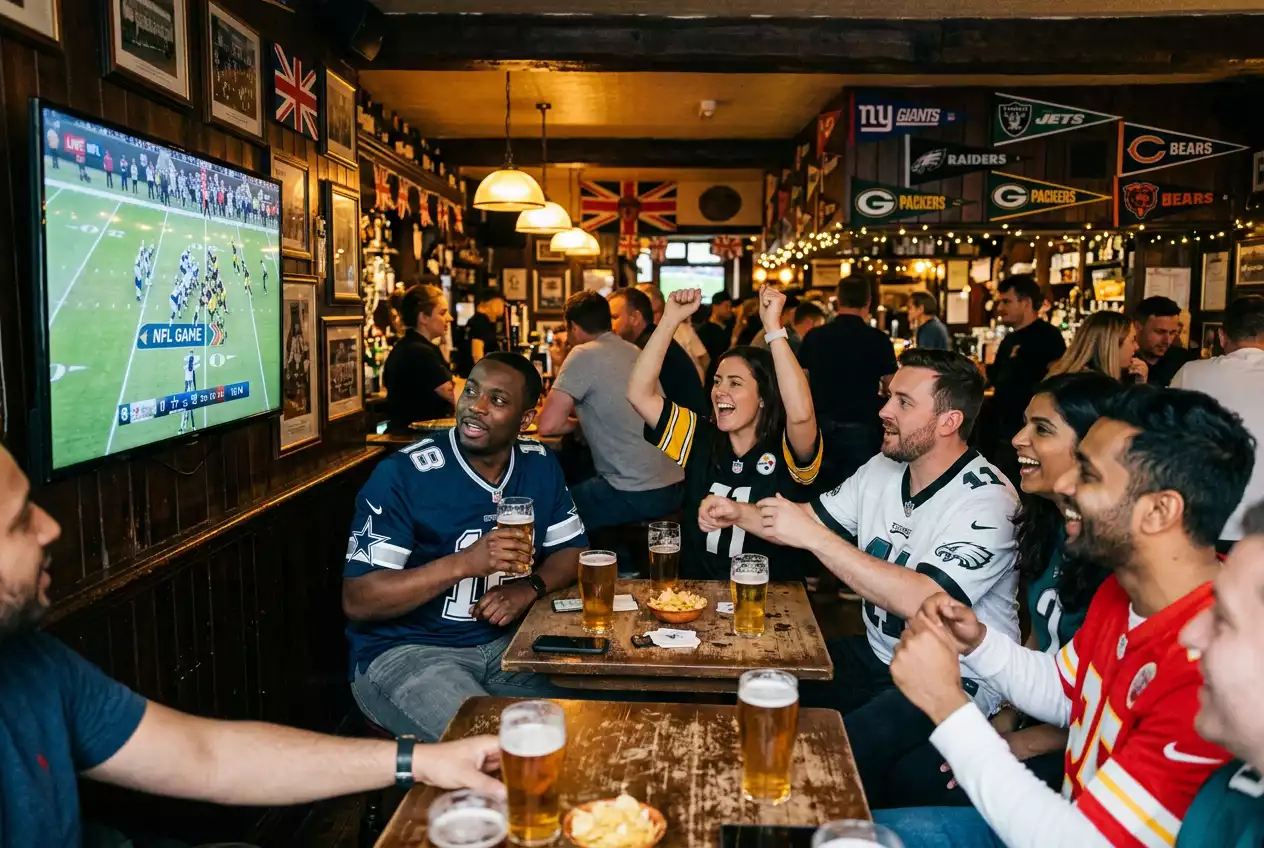
Three forces drive this growth. First, the London Games have normalised NFL as a live spectator event in Britain — since 2007, over 36 regular-season International Series games with combined attendance exceeding 2.2 million. Second, the broadcasting landscape shifted: Sky Sports, ITV, and streaming platforms now carry games at UK-friendly times. Third, the bookmakers invested heavily. Paddy Power became the NFL’s official sports betting partner in the UK and Ireland for the 2025-26 season, a deal that signals how seriously the industry takes this market.
Football — the round-ball version — generates £1.1 billion in Gross Gambling Yield for UK bookmakers annually. The NFL’s share is still a fraction of that, but its growth rate is multiples higher. At current trajectory, NFL betting in the UK is one of the fastest-expanding sports wagering segments in the British market.
I track these trends because they directly affect the quality of NFL markets available to UK punters. More betting volume means tighter lines, more prop markets, and better in-play options. Five years ago, you might have found moneyline and basic spread on a midweek NFL game at a UK bookmaker. Now, a typical Sunday slate offers hundreds of individual markets per game — player props, drive results, quarter-by-quarter scoring, and custom bet builders. The depth is approaching what American sportsbooks offer, but wrapped in the regulatory protections and odds formats that UK punters know.
How NFL Betting Works on UK Platforms
The first time a football punter opens an NFL betting page, the sheer volume of terminology can feel like reading a foreign language. Spread, moneyline, total, prop, future — these are not just American buzzwords. They are the five pillars of NFL wagering, and every single one of them is available on UK-licensed platforms. The good news? If you already know how to bet on a Premier League match, you are closer to understanding NFL markets than you think. The mechanics are similar; the vocabulary just needs translating.

Let me walk through each core market type, because understanding the difference between them is the foundation everything else in this guide rests on. Football generates £1.1 billion in Gross Gambling Yield for UK bookmakers each year — the largest slice of the sports betting pie. NFL markets use the same underlying mechanics as football betting but apply them to a sport with fundamentally different scoring dynamics.
Point Spread — A handicap applied to the favoured team. If the Kansas City Chiefs are listed at -3.5, they must win by 4 or more points for a spread bet on them to pay out. The underdog gets +3.5, meaning they can lose by up to 3 points and the bet still wins. This is the NFL’s equivalent of the Asian handicap that UK football punters already know.
Moneyline — A straight bet on which team wins the game, no handicap applied. In UK terms, this is identical to betting on the match result in football, except NFL games cannot end in a draw during regular time (overtime rules settle ties). Moneyline odds on heavy favourites can be short — sometimes as low as 1.15 in decimal — so the value calculation matters enormously.
Total (Over/Under) — A bet on the combined final score of both teams. The bookmaker sets a line — say 47.5 points — and you bet whether the actual total lands over or under that number. UK punters familiar with goals totals in football will recognise the concept instantly, though NFL totals operate on a much larger numerical scale.
Prop (Proposition Bet) — Any bet not directly tied to the final outcome. Player props cover individual performances: passing yards, rushing attempts, touchdowns scored. Game props cover events like whether the first score will be a touchdown or a field goal. UK bookmakers have expanded their NFL prop menus dramatically, driven by that 90% surge in touchdown scorer wagers.
Future — A long-range bet placed weeks or months before the event settles. Who will win the Super Bowl? Which team takes the AFC East division? Who will be named MVP? Futures markets open as early as February for the following season and offer some of the most compelling value — if you are willing to lock up your stake for months.
Each market type carries different margins and different strategic approaches. UK punters coming from football tend to gravitate toward totals and moneylines first — they feel familiar. Spreads require more adjustment. Props and futures, meanwhile, are where real edges often hide, because bookmakers price them with wider margins and less precision than the primary game lines.
| Market | Decimal | Fractional | American |
|---|---|---|---|
| Spread -3.5 (Favourite) | 1.91 | 10/11 | -110 |
| Spread +3.5 (Underdog) | 1.91 | 10/11 | -110 |
| Moneyline (Favourite) | 1.45 | 9/20 | -222 |
| Moneyline (Underdog) | 2.90 | 19/10 | +190 |
| Total Over 47.5 | 1.91 | 10/11 | -110 |
Betting Toolkit
NFL Betting Toolkit
Built for the UK punter crossing over from football: see what an acca really costs you, translate the markets you know, and size your bankroll for the Sunday slate.
UK punters love an acca — but NFL spreads sit near 50/50, so every leg multiplies the bookmaker’s margin. Add your legs (any odds format), then watch how much fair value you give up.
“Fair odds” is your estimate of the true price — for a standard spread or total it’s about 2.00 (a coin-flip). The default shows four −110 legs: a 4.5% single-bet margin compounds to far more across the acca.
You already bet football. Pick a market you know and see its NFL counterpart — what carries over, and the one thing that trips up every crossover punter.
An 18-week season guarantees losing streaks. Size your unit so a bad run is survivable — not a blow-up — and cap the Sunday slate before it caps you.
The NFL Sunday slate runs ~10 hours — fatigue erodes judgement late. Decide your games and your loss limit before the 6pm kick-off, and set a deposit/session limit with your bookmaker.
The table above shows a typical NFL game line as it might appear across the three major odds formats. UK bookmakers default to decimal or fractional, but understanding the American format matters when you are reading analysis from US-based sources — which, at this stage, is still where most of the sharpest NFL content originates.
Decimal, Fractional, and American — Making Sense of NFL Odds in the UK
Here is something that tripped me up for longer than I care to admit: I would read a sharp American handicapper’s analysis, see a line quoted at -110, and have no instinctive feel for what it meant. If you have spent years reading fractional odds on horse racing or decimal odds on football accumulators, American odds feel needlessly convoluted. They are not — they are just a different expression of the same underlying probability.
Decimal odds are the simplest to work with mathematically, which is why most UK betting platforms default to them. The number represents your total return per pound staked, including your original stake. Odds of 1.91 mean a £10 bet returns £19.10 if it wins — £9.10 in profit plus your £10 back. Fractional odds express the same thing as a ratio of profit to stake: 10/11 means you win £10 for every £11 wagered. American odds split into positive and negative: -110 tells you how much you need to stake to win £100 (in this case, £110), while +190 tells you how much profit a £100 stake would generate (£190).
| Format | Expression | Implied Probability | £10 Stake Returns |
|---|---|---|---|
| Decimal | 1.91 | 52.4% | £19.10 |
| Fractional | 10/11 | 52.4% | £19.09 |
| American | -110 | 52.4% | £19.09 |
Converting American to Decimal — Step by Step
Start with an American line of -150 on an NFL favourite.
For negative American odds: Decimal = 1 + (100 / absolute value of the American odds).
Calculation: 1 + (100 / 150) = 1 + 0.667 = 1.667.
So -150 American equals 1.67 decimal. A £10 bet returns £16.70.
For positive American odds of +200: Decimal = 1 + (American odds / 100).
Calculation: 1 + (200 / 100) = 1 + 2.00 = 3.00.
So +200 American equals 3.00 decimal. A £10 bet returns £30.00.
The implied probability column is the number I actually care about most. Decimal odds of 1.91 imply a 52.4% chance of the outcome occurring — but the true probability of either side covering a spread hovers around 50%. That gap is the bookmaker’s margin, and recognising it is the first step toward identifying value. My recommendation: set your bookmaker account to decimal odds and leave it there. When you read American analysis referencing -110 or +150, use the conversion formula above. Within a few weeks, you will develop an intuitive sense for what these numbers mean.
UK Football Bets vs NFL Bets — What Translates and What Does Not
When I first moved from football betting to NFL, I assumed the transition would be seamless. Both are team sports, both have robust betting markets, both involve reading form and identifying value. I was half right. The strategic thinking transfers beautifully. The specific mechanics? Not so much. The scoring structure of American football — touchdowns worth 6 plus a conversion attempt, field goals worth 3, safeties worth 2 — creates a distribution of final scores that has no parallel in football. And that distribution is what drives every NFL market.
| Feature | UK Football Betting | NFL Betting |
|---|---|---|
| Primary Handicap | Asian Handicap (quarter, half, full goal lines) | Point Spread (half-point increments; key numbers at 3 and 7) |
| Win Market | Match Result (1X2 — includes draw) | Moneyline (two outcomes only; no draw in regulation since overtime rules) |
| Totals | Over/Under 2.5 goals (most common) | Over/Under set at game-specific line (typically 40-55 points) |
| Scorer Markets | Anytime goalscorer, first goalscorer | Anytime TD, first TD, last TD — nearly 90% growth in UK bets on these markets |
| Accumulator Culture | 4-fold, 5-fold accas dominate weekend betting | Parlays (same concept, different name); available but mathematically harsher at higher legs |
| In-Play Dynamics | Continuous flow; goals shift odds sharply | Stop-start structure; drives create natural betting windows between plays |
| Season Length | 38 league matches (August to May) | 18 regular-season games (September to January), then playoffs through February |
The most important difference is in the handicap market. UK football punters know Asian handicaps intimately — the quarter-goal and half-goal lines, the split stakes, the push mechanics. NFL spreads work on the same principle but cluster around completely different numbers. In football, the most common margin of victory is 1 goal. In the NFL, the most common margins are 3 points (a field goal) and 7 points (a touchdown plus extra point). These key numbers shape every spread line and every strategic decision around them. I will dig into this in the dedicated spread explainer, but for now, understand that the distance between -2.5 and -3.5 in the NFL is far more significant than the equivalent shift in football handicaps.
Accumulator culture deserves a special mention. British punters love accas — the Saturday 6-fold on Premier League results is practically a national institution. NFL accumulators work the same way mechanically, but the mathematics punish you differently. With only 16 games on a typical NFL Sunday slate (versus 10 Premier League matches), each leg of your acca carries more weight. And because NFL spread bets are designed to be close to 50/50 propositions, the compounding effect of multiple legs erodes your edge faster than you might expect from football accas where occasional heavy favourites anchor the bet.
The stop-start nature of American football also creates a fundamentally different in-play experience. Football flows continuously, with odds shifting in real time. NFL games are segmented into discrete drives, each lasting several plays, with natural stoppages for commercials, timeouts, and changes of possession. These pauses create windows where in-play odds stabilise briefly — and where alert bettors can find value that the live pricing model has not yet absorbed.
Choosing a UK Bookmaker for NFL Markets
I have accounts with six different UK bookmakers, and I use at least three of them on any given NFL Sunday. Not because I am indecisive — because different platforms offer meaningfully different NFL experiences. One might have the deepest player prop menu, another consistently posts earlier lines, and a third runs the best bet builder for combining spread and touchdown selections. Shopping for the right bookmaker is not a one-time decision; it is an ongoing process that directly affects your bottom line.
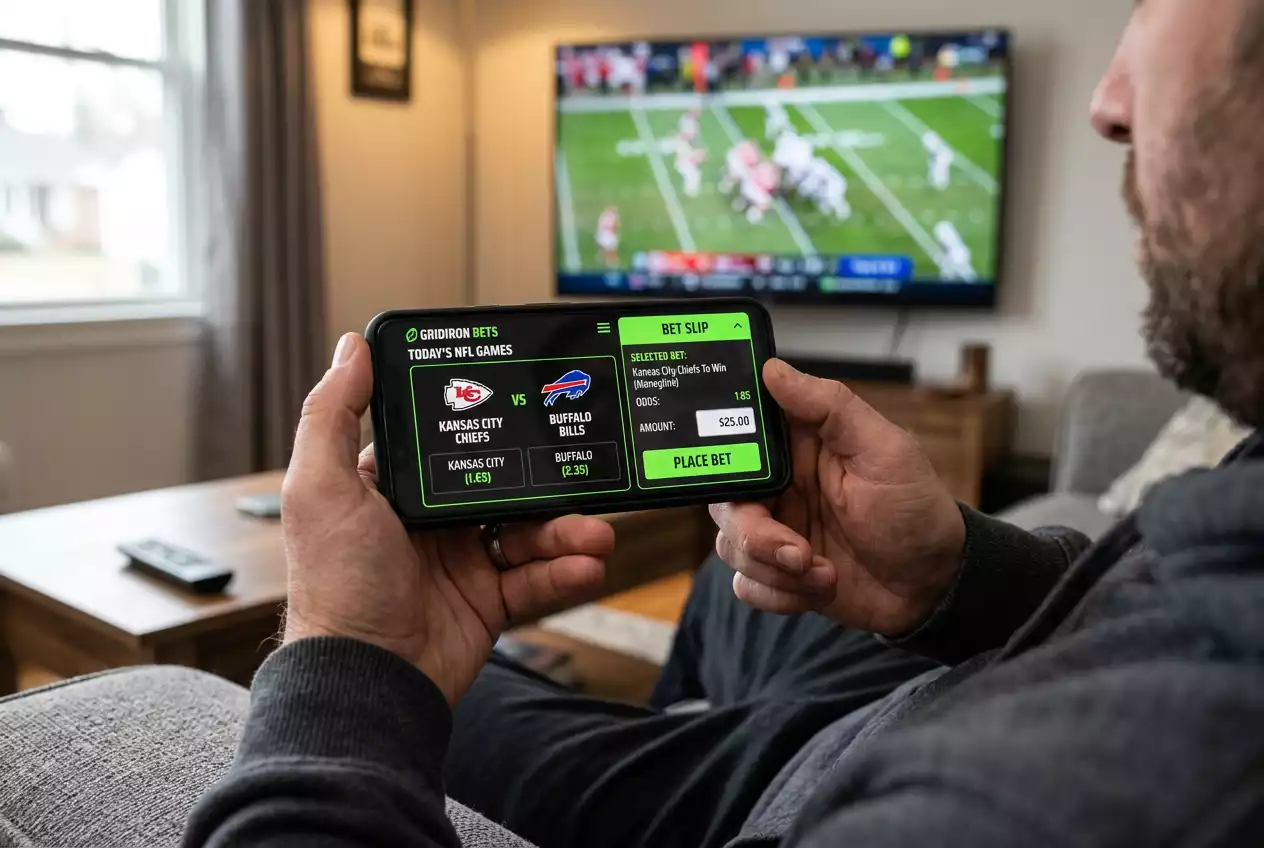
The NFL-UK betting relationship hit a significant milestone when Paddy Power became the league’s official sports betting partner in the UK and Ireland for the 2025-26 season. Dan Spillane of Flutter Entertainment framed the timing around the sport reaching new heights across the UK and Ireland, coinciding with the first-ever NFL game in Ireland. That kind of commercial partnership signals deep commitment — it means dedicated NFL content, enhanced markets, and promotional investment that benefits punters even if you do not use that specific bookmaker, because it forces competitors to match the offering.
When evaluating any bookmaker for NFL, I apply five criteria. Market depth: how many individual markets per game — 150 or more signals a serious NFL platform. Odds competitiveness: even 0.05 differences compound over a full season. Live betting quality: how responsive is the in-play interface during drives? Bet builder functionality: can you combine spread, total, and player props into one custom bet? Cash-out availability: not every platform offers it on every NFL market.
| Criteria | What to Look For | Why It Matters for NFL |
|---|---|---|
| Market Depth | 150+ markets per game; player props, alt lines, quarters | NFL has limited games per week — depth per game replaces breadth across fixtures |
| Odds Competitiveness | Consistent top-3 pricing on NFL spreads and totals | Small differences compound over 18 weeks of regular season plus playoffs |
| Live Betting | Fast odds updates, drive-level markets, streaming | NFL’s stop-start format rewards in-play bettors who act between plays |
| Bet Builder | Same-game multi with spread, total, and player props | NFL’s data richness makes combined bets more analytically grounded than in most sports |
| Cash Out | Full and partial cash-out on pre-match and in-play bets | NFL games swing momentum sharply; early cash-out captures value from lead changes |
UKGC Licence Check — Before depositing with any bookmaker, verify their licence on the Gambling Commission’s public register. Every legally operating UK bookmaker holds an active licence number. If a platform is not on the register, it is not authorised to offer gambling services to British residents, regardless of how attractive its NFL odds might appear. The UK has over 8,200 licensed gambling premises, and the vast majority of online operators hold remote licences specifically for internet-based betting.
I will not rank specific bookmakers here — that analysis gets the full treatment in the dedicated bookmaker comparison. The landscape is genuinely competitive for NFL markets right now, more so than at any point in the decade I have been doing this. Use that competition to your advantage by maintaining accounts across multiple platforms and line-shopping every bet.
The NFL Calendar Through a UK Bettor’s Eyes
One mistake I see British punters make repeatedly is treating the NFL like football — assuming you can just tune in on a Saturday afternoon and start betting. The NFL runs on its own rhythms, and understanding the calendar is essential for knowing when to bet, what to bet on, and when to sit on your hands.
September
Regular season kicks off. 18 weeks of action through early January.
January-February
Playoffs and Super Bowl. The sharpest lines and biggest betting volume of the year.
Late April
NFL Draft. Prop markets on picks, trades, and draft positions.
March-August
Off-season and preseason. Futures markets open. Win totals and Super Bowl odds available year-round.
For UK punters, the timing of games is the critical detail. The main Sunday slate starts at 6:00 PM UK time, with a second wave at 9:05 PM or 9:25 PM. The Sunday night primetime game kicks off around 1:20 AM Monday morning. Thursday Night Football starts at 1:15 AM Friday UK time, and Monday Night Football at 1:15 AM Tuesday. If you plan to bet in-play, those late kick-offs demand either commitment or selective targeting of the earlier games.
The London Games deserve a dedicated mention because they are the one part of the NFL calendar that runs on your time zone. Since 2007, the UK has hosted over 36 regular-season games through the International Series, with cumulative attendance exceeding 2.2 million spectators. The 2025 London games shattered records: more than 6 million people watched on TV or online, the highest figure ever recorded for international NFL broadcasts. These games kick off at 2:30 PM UK time, making them the most accessible NFL fixtures of the entire season for British bettors — and the betting volume reflects it, with wagering on London games through major operators up 51% year on year in 2024.
The NFL International Series has brought regular-season games to Wembley, Tottenham Hotspur Stadium, and Twickenham. In 2025, the league expanded to Dublin for the first time, and combined viewership across all international fixtures exceeded anything previously achieved outside North America.
Futures markets run year-round, which means you never truly have an NFL off-season as a bettor. Super Bowl winner odds are posted within hours of the final whistle in February and remain tradeable through the entire off-season and regular season. Division winner and conference winner markets open alongside them, and individual awards generate their own betting interest. The NFL Draft in late April creates a short, intense burst of prop market activity — first overall pick, draft position over/unders, and selection-order props. Then preseason begins in August, offering a handful of exhibition-game markets for punters who cannot wait.
Point Spreads — The Heartbeat of NFL Betting
If there is one market that defines NFL betting, it is the point spread. In the US, spread betting accounts for the largest share of NFL handle. In the UK, it is growing fast but still sits behind moneyline for many punters — partly because the concept is less familiar. That is changing, and understanding spreads is non-negotiable if you want to take NFL betting seriously.
A spread is a handicap — conceptually identical to the Asian handicap in football, but applied to a sport where final score margins follow very different patterns. When a bookmaker sets a spread of -6.5 on a team, they are saying that team needs to win by 7 or more points for the spread bet to pay out. The opponent, listed at +6.5, can lose by up to 6 points and the bet still wins.
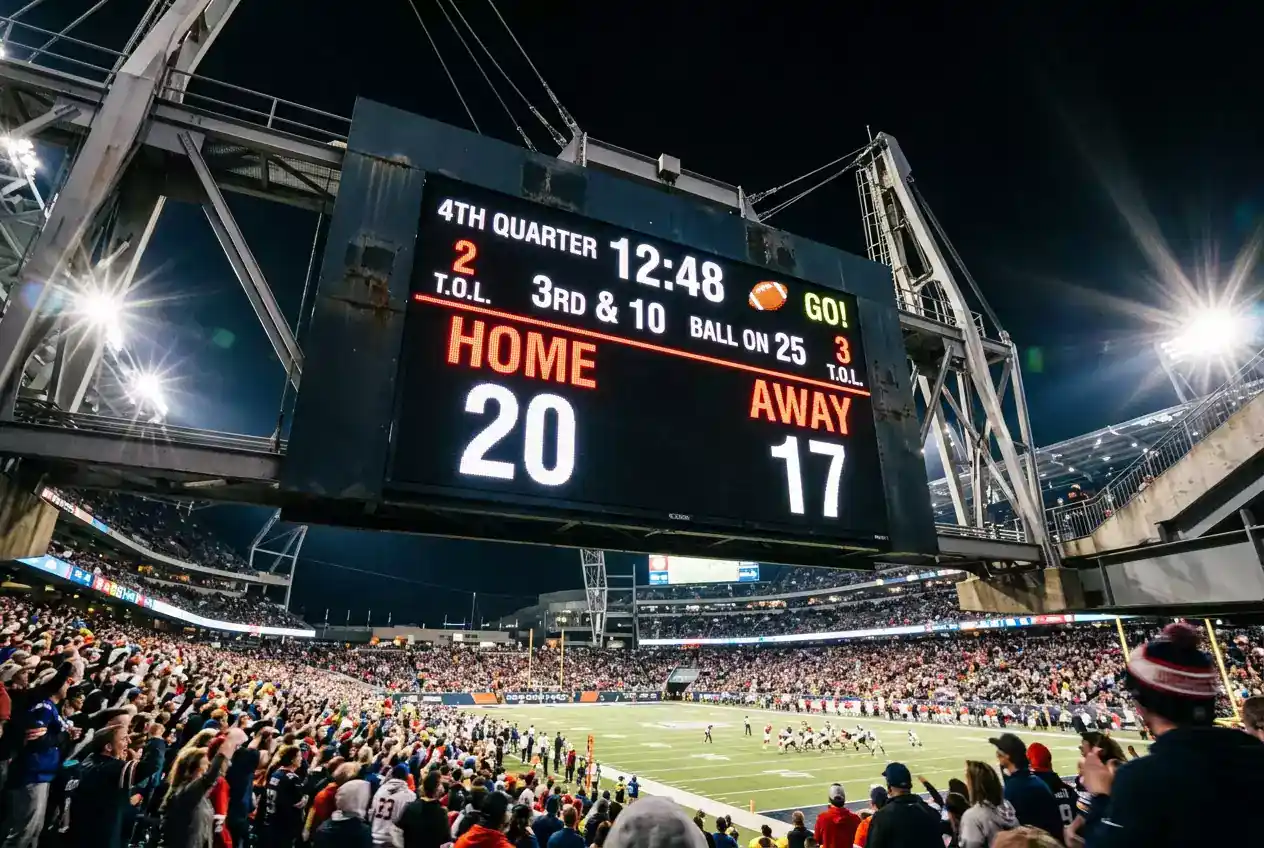
The half-point eliminates the possibility of a push (a dead heat that returns your stake), which is why most NFL spreads are set at .5 increments.
ATS (Against the Spread) — A team’s record when the point spread is factored in. If the Chiefs are 9-5 ATS, they have covered the spread in 9 of 14 games. ATS records are the primary performance metric for spread bettors and differ significantly from straight win-loss records.
Cover — When a team wins by more than the spread (favourite) or loses by fewer points than the spread (underdog). Covering the spread is what determines whether your bet pays out.
Push — When the final margin lands exactly on the spread number. A -7 spread with a 7-point margin of victory results in a push — your stake is returned. This only happens on whole-number spreads.
Spread Calculation — A Practical Example
Suppose you see a line: Team A -3.5 at 1.91 decimal odds vs Team B +3.5 at 1.91.
You back Team A at -3.5 with a £20 stake.
Final score: Team A wins 24-20 (margin: 4 points).
Result: Team A covered the 3.5-point spread. Your bet wins.
Payout: £20 x 1.91 = £38.20 (profit of £18.20).
If Team A had won 23-20 (margin: 3 points), they would NOT have covered -3.5, and your bet would have lost.
The key numbers in NFL spread betting are 3 and 7 — the two most common margins of victory. Approximately 15% of all NFL games are decided by exactly 3 points, and another 9% by exactly 7 points. This means the distance between -2.5 and -3.5 on a spread is not just one point of handicap; it is a jump across the single most frequent final margin in the sport. During the 2025 season, favourites won outright in 65.9% of games but covered the spread in only 47.8% of them — a gap that illustrates just how precisely bookmakers calibrate these lines. The spread is designed to split action evenly, and it does its job remarkably well.
For a deeper breakdown of spread mechanics and strategies for crossing key numbers, I have written a full guide that goes well beyond this primer.
Building an NFL Betting Strategy That Survives a Full Season
During my second season of serious NFL betting, I had a brilliant October — up 15 units, feeling invincible. By late November, I had given it all back and then some, because I had no system, no bankroll rules, and no discipline when the inevitable losing streaks arrived. That experience taught me the lesson I now repeat to every UK punter who asks for advice: a betting strategy is not a collection of tips. It is a framework for surviving 18 weeks of regular season, four rounds of playoffs, and the emotional roller coaster that comes with all of it.
The UK’s sports betting market processes roughly 290 million online bets per month on real events. That is an enormous volume, and a large portion of it is recreational — placed without systematic analysis, without bankroll management, and without a defined edge. Andrew Rhodes, the Gambling Commission’s Chief Executive, noted that UK gambling has reached its highest Gross Gambling Yield ever at £15.6 billion, with a stable participation rate of 48% among adults. Within that vast market, the punters who consistently profit are the ones who approach betting as a discipline rather than entertainment.
Pre-Season Strategy Checklist
- Define your total NFL bankroll for the season — money you can afford to lose entirely without affecting your financial obligations.
- Set a standard unit size between 1% and 3% of your bankroll. A £1,000 bankroll means a standard unit of £10-£30.
- Choose 2-3 bookmaker accounts for line-shopping. Open and fund them before Week 1.
- Decide which markets you will specialise in: spreads, totals, player props, or a combination. Specialisation beats generalism for most punters.
- Set up a tracking spreadsheet or use a bet-tracking app. Record every bet: date, market, odds, stake, result, running profit/loss.
- Establish your weekly research routine: when you study film, when you review injury reports, when you place bets.
- Set a loss limit per week. If you hit it, stop. No exceptions.
Bankroll management is not glamorous, but it separates punters who survive to profit from those who blow up. If you bet 5% of your bankroll per game and hit a seven-game losing streak — which happens to every bettor at least once per season — you have lost 35%. At 2% per game, the same streak costs 14%. That difference is everything.
Bankroll Warning — The NFL season is long, variance is real, and the temptation to chase losses after a bad Sunday is powerful. If you do not have a bankroll plan before the first kickoff of Week 1, you are not betting strategically — you are gambling recreationally with a narrative of strategy draped over the top. Both are fine, but be honest with yourself about which one you are doing.
Market selection matters as much as bankroll management. Over years of tracking, I have found that my edge concentrates in specific market types — totals and alternative spreads, where my model consistently outperforms the closing line. Your edge will be different, and finding it requires honest record-keeping across at least two full seasons. Discipline means saying no to 80% of the games on a Sunday slate and focusing your bankroll on the 3-5 plays where your analysis gives you a genuine reason to bet. I explore how to identify those plays in my NFL betting tips guide, and the full NFL betting strategy guide covers unit sizing, season-long frameworks, and result-tracking in the detail this topic deserves.
Super Bowl Betting — The Biggest Night in UK NFL Wagering
The Super Bowl is the one NFL event that transcends the sport in Britain. People who could not name a single quarterback will still gather at a mate’s house or a screening event, stay up until 3:00 AM, and place a bet on something — even if it is just the colour of the Gatorade poured over the winning coach. That crossover appeal makes the Super Bowl the single highest-volume NFL betting event on UK platforms, by a considerable margin.
The audience figures tell the story. Super Bowl 59, Eagles versus Chiefs in February 2025, drew 3.4 million British viewers. For context, that is more than many Premier League fixtures attract and roughly a quarter of the total UK NFL fanbase tuning into one event. Where there are eyeballs, there are bets — and UK bookmakers respond by offering their widest NFL menus of the year.
Super Bowl Sunday is technically Monday morning in the UK. The game typically kicks off around 11:30 PM GMT, which means the final whistle falls in the early hours. Despite the timing, UK viewership and betting volume have increased every year for the past five consecutive seasons.
Super Bowl markets on UK platforms include standard game lines plus an enormous range of props: first touchdown scorer, MVP, total touchdowns by a specific player, overtime, exact score combinations, and halftime lead markets. Some bookmakers offer novelty props on the national anthem length or half-time show details, though these carry enormous margins and are best treated as entertainment.
3.4 Million
UK viewers for Super Bowl 59 — Eagles vs Chiefs, February 2025
11:30 PM GMT
Typical Super Bowl kick-off time for UK audiences
200+
Individual betting markets available at leading UK bookmakers for the Super Bowl
The real value in Super Bowl betting for strategic punters lies in the futures market. Super Bowl winner odds are available year-round, and the best prices tend to appear either immediately after the previous Super Bowl (when public attention is lowest) or during the early weeks of the regular season (when narrative-driven overreactions create mispricings). By the time conference championship weekend arrives, the remaining four teams are priced efficiently and the edge narrows. I cover the timing, market mechanics, and strategic approach to Super Bowl betting in the dedicated UK guide.
Responsible Gambling and the NFL Sunday Trap
I am going to be direct about something that most betting guides treat as an afterthought: NFL betting carries specific risks that differ from football or horse racing betting, and understanding those risks is as important as understanding the markets themselves. The structure of an NFL Sunday — 13 or more games unfolding simultaneously across a 10-hour window, from 6:00 PM to the early hours of Monday morning — creates a uniquely intense gambling environment. I have seen disciplined punters lose their composure because the sheer volume of live action overwhelmed their pre-game plan.
The data reinforces why this matters. Among online sports bettors in the UK, 8.7% score 8 or higher on the Problem Gambling Severity Index — more than double the 4.2% rate across all forms of gambling. Sports betting, specifically, carries elevated risk compared to lottery play or casino games. The overall rate of problem gambling among UK adults sits at 2.7%, a figure that has remained stable but represents a significant number of people given the UK’s population. Andrew Rhodes of the Gambling Commission has described the Gambling Survey for Great Britain as a key building block of evidence for understanding gambling behaviour and its consequences — and the evidence consistently shows that high-frequency, in-play sports betting is where risk concentrates.
GamStop and Self-Exclusion — GamStop is a free service that allows you to self-exclude from all UKGC-licensed online gambling sites for a period of 6 months, 1 year, or 5 years. Once registered, you cannot access your accounts on any participating platform. It is designed as a circuit-breaker for anyone who feels their gambling is becoming difficult to control. Every UK-licensed bookmaker participates in the scheme.
UKGC-licensed platforms are required to offer responsible gambling tools, and using them proactively is a sign of strategic maturity, not weakness. Deposit limits cap how much money enters your betting account per day, week, or month. Reality checks trigger reminders about session length and total wagering. Session time limits can log you out automatically. Loss limits cap total losses across a timeframe. I use some of them myself — not because I have a problem, but because at 1:00 AM on a Monday, after eight hours of NFL, my decision-making is worse than it was at 6:00 PM.

UKGC Tools for NFL Bettors — Deposit limits (daily, weekly, monthly), session time limits, reality checks at custom intervals, loss limits, cool-off periods (24 hours to 6 weeks where your account is temporarily suspended), and full self-exclusion via GamStop. All UK-licensed bookmakers must offer these tools and make them accessible from your account settings. You do not need to contact customer support to activate them.
The NFL’s scheduling creates what I call the “Sunday trap.” Games start at 6:00 PM UK time and the final whistle on Sunday Night Football can come after 4:00 AM Monday morning — 10 hours of continuous betting opportunities during hours when fatigue erodes judgement. Decide before the day starts which games you are betting on, set a session limit, and respect it. If you find yourself chasing losses from the early games by adding impulsive bets on the late slate, step away.
The Regulatory Framework Behind Every NFL Bet You Place
Most punters never think about the regulatory layer that sits between them and their bookmaker. I did not either, until a few years ago when a friend was unable to withdraw winnings from an unlicensed offshore platform that had been offering NFL markets. That experience crystallised something I now consider fundamental: the Gambling Act 2005 and the UKGC licensing system are not bureaucratic background noise. They are the reason your deposits are protected, your odds are fair, and your complaints have legal weight.
The Gambling Act 2005 is the primary legislation governing all gambling activity in Great Britain. It established the Gambling Commission as the independent regulator with authority to issue and revoke operating licences, set licence conditions, and investigate breaches. Any operator wishing to offer gambling services to British residents — including NFL betting — must hold an appropriate licence. The UK gambling market’s Gross Gambling Yield reached a record £15.6 billion, with remote gambling (almost entirely online) accounting for £6.9 billion of that total, or roughly 60% of the market once lotteries are excluded. The scale of the industry means regulation is not theoretical; it is actively enforced, with licence reviews, financial penalties, and revocations occurring regularly.
Gambling Act 2005 and UKGC Licensing — The Act requires every gambling operator serving UK customers to hold a UKGC licence. Licence conditions mandate segregation of customer funds, transparent terms and conditions, fair advertising standards, and participation in the Alternative Dispute Resolution process. The Commission publishes a public register of all licensed operators, which you can search by company name or licence number. If an operator is not on this register, they are not legally authorised to take your bets.
Remote gambling has grown by 63% since the 2015/16 financial year, reflecting the shift from high-street shops to mobile-first platforms. For NFL bettors, this means your UK bookmaker must verify your identity before you deposit, monitor your spending patterns, and intervene if activity triggers certain thresholds. These measures can feel intrusive — enhanced verification requests mid-season are not uncommon — but they exist for legitimate protective reasons.
The regulatory landscape is not static. The government’s gambling reform white paper set in motion changes that continue to unfold: a statutory levy on operators, refined affordability checks for higher-spending customers, and — from the 2026 season — a ban on front-of-shirt gambling sponsorship in the Premier League. For NFL bettors, the practical impact is incremental but real: tighter verification, more sophisticated responsible gambling tools, and a regulatory environment that prioritises consumer protection alongside market growth.
None of this should discourage you from betting on the NFL. The UK’s regulatory framework is one of its genuine advantages over less-regulated markets. Your bookmaker is solvent, your funds are segregated, and you have recourse if something goes wrong. Just make sure you are using a licensed operator.
Common Questions About NFL Betting in the UK
Is NFL betting legal in the UK?
Yes, fully legal. Any bookmaker holding an active UKGC licence can offer NFL markets to British residents. The Gambling Act 2005 provides the framework, and the Commission maintains a public register of all licensed operators. Only bet with licensed platforms — unlicensed offshore sites operate outside British consumer protection laws. Search the UKGC’s register before opening an account.
What is point spread betting and how does it differ from Asian handicaps?
A point spread is a handicap applied to the favoured team. If a team is listed at -3.5, they must win by 4 or more points for the bet to pay out. The concept is identical to Asian handicaps in football, but the numbers differ. Football handicaps revolve around goals (0.5 to 2.5), while NFL spreads range from 1 to 17+ points. The most common margins of victory cluster around 3 and 7 points, making these “key numbers” disproportionately important. NFL spreads at UK bookmakers are almost always set at half-point increments, eliminating pushes, whereas Asian handicaps use quarter-goal lines that split your stake.
What are the best NFL betting sites for UK punters?
The strongest NFL platforms in the UK share several characteristics: deep market menus with 150+ options per game, competitive odds on spreads and totals, responsive in-play interfaces, robust bet builders, and full UKGC licensing. I recommend maintaining accounts across three or four bookmakers and line-shopping every bet. Evaluate on market depth, odds quality, live betting functionality, and cash-out availability rather than sign-up offers alone.
How do NFL odds work in decimal and fractional format?
Decimal odds represent your total return per pound staked, including the original stake. Odds of 1.91 mean a £10 wager returns £19.10 if it wins. Fractional odds express profit relative to stake: 10/11 means you win £10 for every £11 wagered. Most UK bookmakers default to decimal, which is simpler for calculating implied probability — divide 1 by the decimal odds (1 / 1.91 = 52.4%). When reading American analysis, you will encounter American odds (-110, +150), convertible using the formulas in this guide. I recommend keeping your account set to decimal.
What types of NFL bets can I place with UK bookmakers?
UK-licensed bookmakers offer five core NFL market types: point spread, moneyline, totals, proposition bets, and futures. Beyond these, most platforms now offer bet builders, alternative spreads and totals, quarter and half markets, drive-result props, and team-specific totals. Touchdown scorer betting alone grew nearly 90% on UK platforms in a single season. Accumulators combining multiple NFL selections are widely available and popular among British punters.
When does the NFL season run and when can I place bets?
The regular season runs from early September through early January (18 weeks). Playoffs begin in mid-January, culminating in the Super Bowl in early February. The NFL Draft in late April generates prop betting markets. Futures — Super Bowl winner, division winners, season win totals — are available year-round. For UK punters, the main Sunday slate begins at 6:00 PM UK time, with later games running into the early hours of Monday.
How do UKGC responsible gambling tools apply to NFL betting?
Every UKGC-licensed bookmaker must offer deposit limits, session time limits, reality checks, loss limits, cool-off periods, and access to self-exclusion via GamStop. These tools are particularly relevant for NFL because the Sunday slate can span 10+ hours. I recommend setting session time limits before the season and using deposit limits aligned with your bankroll. GamStop offers full self-exclusion from all UK-licensed sites for 6 months, 1 year, or 5 years.
Created by the ”nfl Betting Fourm” editorial team.